Demonstrations
DCFlex Demonstrations
DCFlex will feature at least 10 field demonstration projects to explore how data centers can operate more flexibly and integrate more seamlessly with the electric grid. These real-world "living laboratories" bring together key players from across industry sectors to test a range of use cases like load flexibility, power quality, and backup power. By selecting diverse sites-varying in geography, market structure, size, and technology-DCFlex aims to develop practical strategies and tools that support the growing energy demands of AI and digital infrastructure. The insights gained will help shape industry standards and frameworks to accelerate grid connections and reduce barriers to adoption.

Demonstration Locations, Use Cases, And Data Center Types
Deliverables
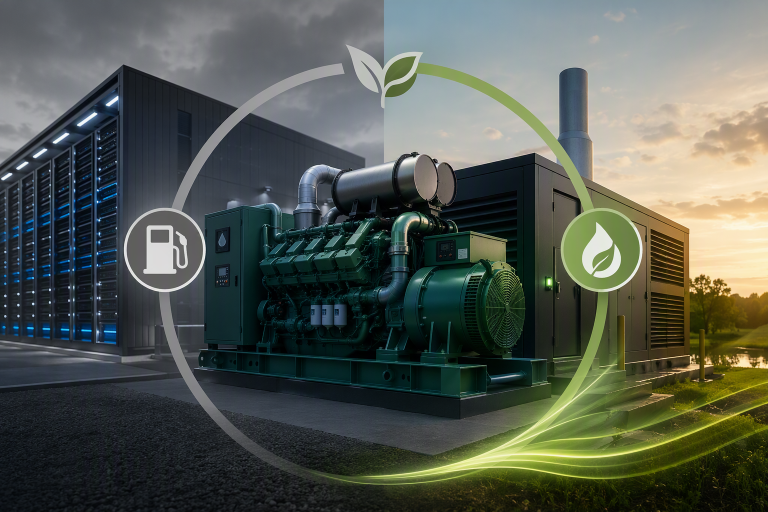
(Public) DCFlex Demonstration of Cleaner Backup Power: Field-Validated Emissions Performance of Hydrotreated Vegetable Oil (HVO) in Data Center Backup Generators
As part of EPRI’s DCFlex initiative, a field demonstration was conducted to evaluate hydrotreated vegetable oil (HVO) as an alternative fuel for backup diesel generators used in data centers. The project compared HVO and conventional fossil diesel under real-world operating conditions at a data center facility in Dallas, Texas, using a 2 MW backup generator. The study was designed to address the limited availability of field-validated emissions data for HVO and to provide information that may support sustainability reporting, permitting discussions, and future evaluations of backup generation resources. Emissions testing was performed using U.S. Environmental Protection Agency reference methods, while a lifecycle greenhouse gas assessment was conducted using a GREET-based methodology.
HVO vs. Fossil Diesel on a Data Center Backup Diesel Engine: Field Test Results and Lifecycle GHG Assessment
This report presents results from a field emissions test of HVO versus fossil diesel conducted on May 6, 2026, on a 2 MW Cummins QSK60 Series backup diesel engine (model DQKAB) at a Compass Datacenters facility in Texas. Testing was performed by Mostardi Platt using United States Environmental Protection Agency reference methods at two load conditions, 50% and 100% of rated capacity, for each fuel. Measured parameters included particulate matter (PM), gaseous emissions (NOx, CO, and CO2), total hydrocarbons (THC), non-methane non-ethane hydrocarbons (NMNEHC), and hazardous air pollutants (HAPs) including formaldehyde, acetaldehyde, acrolein, and methanol. Fuel quality analysis and engine performance data were also collected. A separate GHG lifecycle assessment (LCA) was conducted using the Argonne National Laboratory Greenhouse gases, Regulated Emissions, and Energy use in Technologies (GREET) model.

2025 DCFlex Demonstration Projects Update
This white paper provides insights into four DCFlex demonstration projects focused on flexibility in design, utility programs, grid planning, and energy supply. It highlights real-world demonstrations in Phoenix, AZ; Lenoir, NC; Paris, France and Chicago, IL showcasing techniques such as AI workload modulation, demand response, and backup power integration. These projects help to validate the technical feasibility of dynamic load management, fault ride-through capabilities, and carbon-aware operations, offering a blueprint for sustainable data center growth while supporting grid stability and accelerating renewable integration.
Demonstration Partners